I spent a week completing a cultural exchange programme facilitated by the company Angloville, where I provided conversation practice to Polish adults near Bialystok.
I would have said that my day started at nine, but it started much earlier, as I had an awful night’s sleep. My hostel roommates kept coming in and out of the room and talking very loudly. I can’t complain really. it is what you expect when you only pay £13 a night. I should have paid more.
Anyway, at nine I set off for my only full day in Warsaw where I wanted to do some sightseeing. Firstly, I headed to scope out where Angloville would be collecting us to take us to their venue. The meeting spot was right by the Palace of Culture and Science – one of Warsaw’s most notable landmarks.
From there, I navigated to the second hostel that I would be staying at once the programme had finished, just so I knew the way when the time came. It was ten am, so after finding the hostel, I decided to visit some of Warsaw’s many, many, many museums. There are so many museums on topics like local history, modern art, ethnography, trains and the Warsaw Uprising. Unlike in London, the museums aren’t free with entry prices ranging from eighteen – thirty-five zloty. Although there are certain days where entry can be free, so check online.
En route to the museum of the Warsaw Uprising, I spotted the Warsaw Railway museum, which cost eighteen zloty – almost half the price of the former. Anybody who knows me I am a massive cheapskate who is always looking to cut costs, but when in Poland, do as the Polish do, so I attended the museum of the Warsaw Uprising.
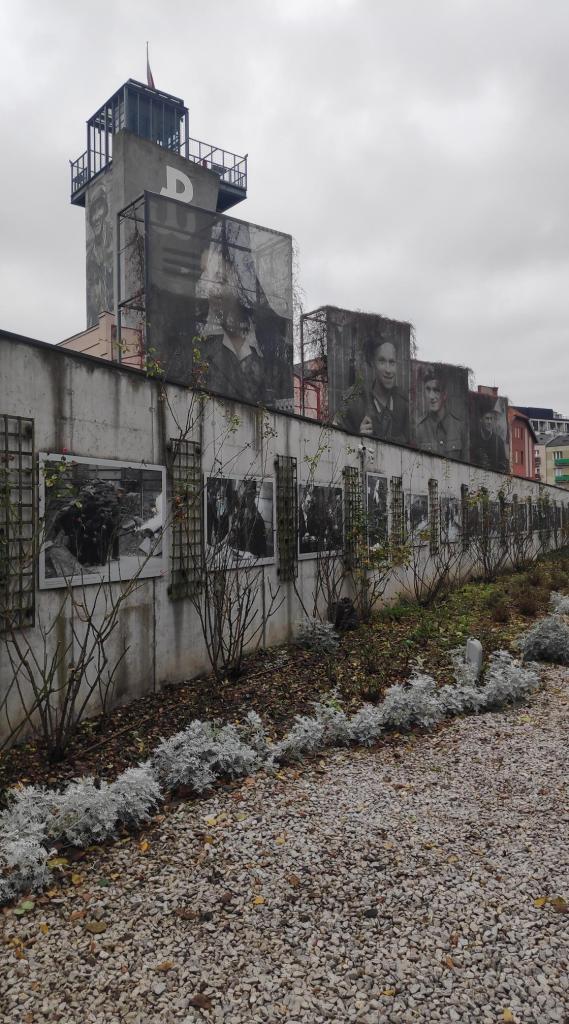
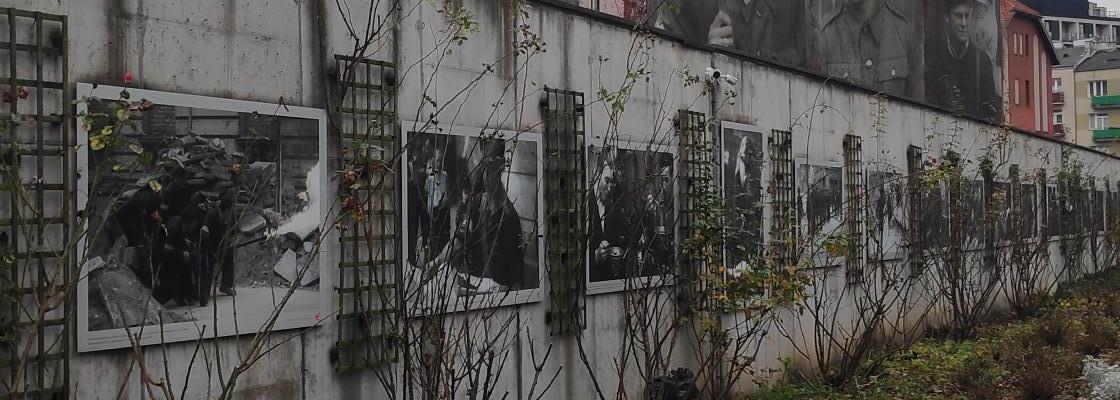
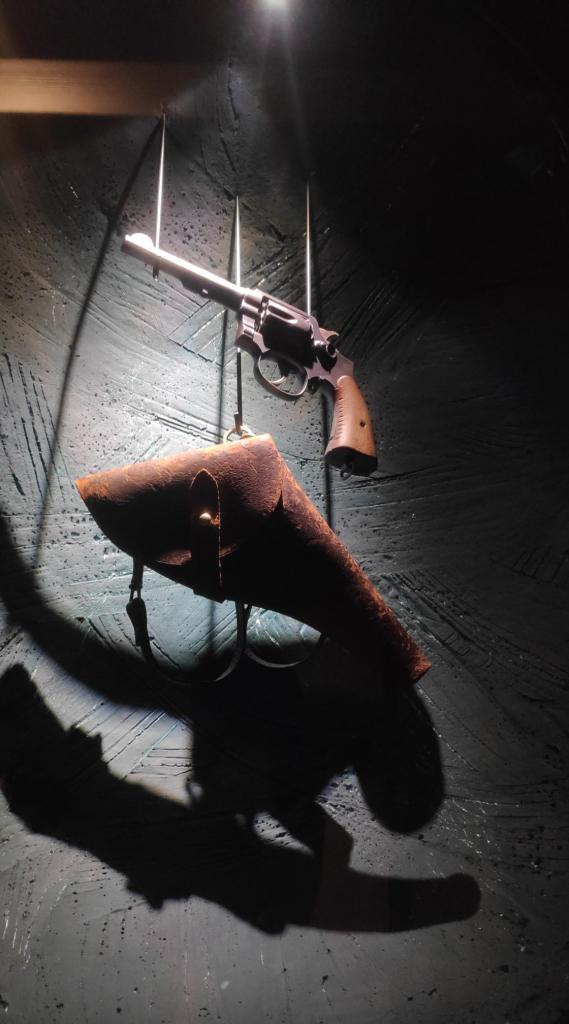
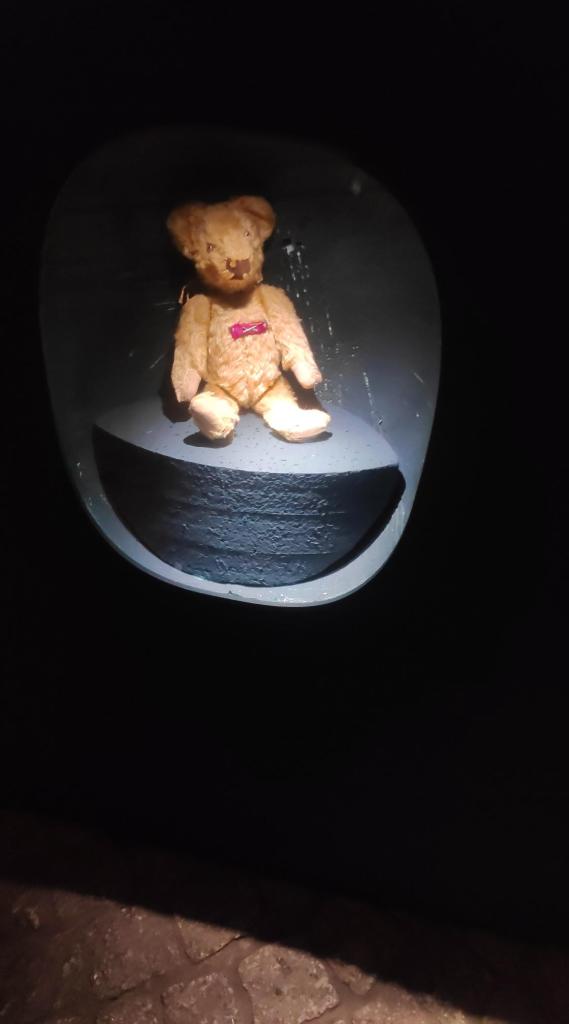
It had lots of fascinating information about the uprising including its origins and its devastating consequences. Tired of years of repression, the inhabitants of the Warsaw Ghetto rose up against their oppressors. They fought valiantly for two months before finally capitulating. In retaliation, Hitler razed the city to the ground. After the war, the Soviets destroyed what was left. The museum was a touching tribute to their struggles. It had some artifacts from the uprising including one of the rebel’s guns – which had ten notches – each one signifying the Germans he killed, as well as a teddy bear belonging to a journalist documenting the uprising.
There was also a small section on the subsequent Soviet Occupation of Warsaw after the Nazis left. I’m not too sure Poland fared any better under Communism than they did with Fascism. It was a great museum though – 35 zloty and closed on Tuesdays.

As it was nearing midday, I went to get some lunch. I decided to try a milk bar near my hostel. Milk Bars are the Polish equivalent of British greasy-spoon cafes. Having become popular during the Soviet occupation, they are a great way of eating cheap, authentic Polish food. It won’t be all fancy like you get in a restaurant, but it will still be delicious.
A half-hour walk and some strange graffiti later

I was eating minced meat in a cabbage leaf in a tomato sauce with rice.

Or as they call it in Polish – Golabki, sos pomidorowy and Ryz. (Don’t ask me how to pronounce that.) I also found it interesting that the Polish word for tomato: Pomidorowy, is very similar to the Italian word for tomato: Pomodoro. Anyway, my lunch was tasty and all less than £4.
Now it was one o’clock. I did have a vague idea of visiting another museum, but I thought I would see more of the city rather than spending another twenty zloty. To that end, I visited the park behind the Tomb of the Unknown Soldier.

From here, I walked down to the River Vistula – Poland’s biggest river. And I spent a lovely hour walking along the banks, where I saw lots of fisherman, somebody flying a drone, a calisthenics gym and even a high-ropes adventure course.

It was a lovely walk, but at half two, I headed back to the hostel to regroup. Something I have found annoying about Poland is that the cars only stop at green men if they are continuing straight on. If they are turning then they will turn and you best hope you’re not in their way. Also the whole jay-walking being illegal was annoying. I felt like a right mug standing standing at a red man while the road was clear.
Anyway, after a pit-stop at the hostel, I headed to join the free-walking tour that Angloville was providig for me. We met at the Sigismund Statue at 5pm. I also met some of my fellow teachers, or mentors as Angloville calls us. There was fellow Londoner Lydia, scouser Yvonne, Canuck Teresa and Bulgur Kat.
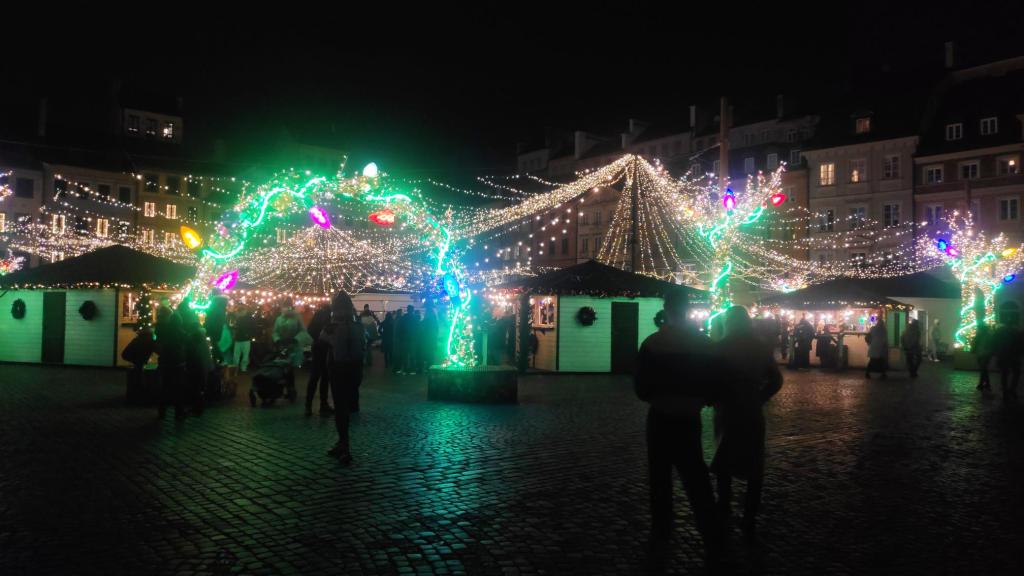
Despite it being cold and dark, the tour was interesting. We were told that the location of the Christmas market I visited yesterday was the old Market Square which contained a statue of the mermaid. The old story went that a fisherman called War caught a mermaid called Zwava and the two fell in love. The city was named after them. In Polish, Warsaw is pronounced “Warzwava (Varshava.)
We also discovered that the emblem of Poland is a white eagle on a red background. (Insert picture) this was because of a legend that says the founder of Poland once saw a white eagle flying into a red sunset, which is also one explanation behind Poland’s white and red flag.

It was interesting talking with Lydia and Yvonne, as they had done Angloville programmes before. In fact, Lydia had left her old programming job to do some travelling. Meanwhile, the Bulgarian Kat was getting on well with our Polish tour guide, due to their shared Slavic roots and bitterness for how the Soviet Russians had destroyed their countries. I do think that all the young liberals screaming for a Communist revolution, while living in the affluent West, only need to visit an ex-communist country, to see how badly Communism doesn’t work.
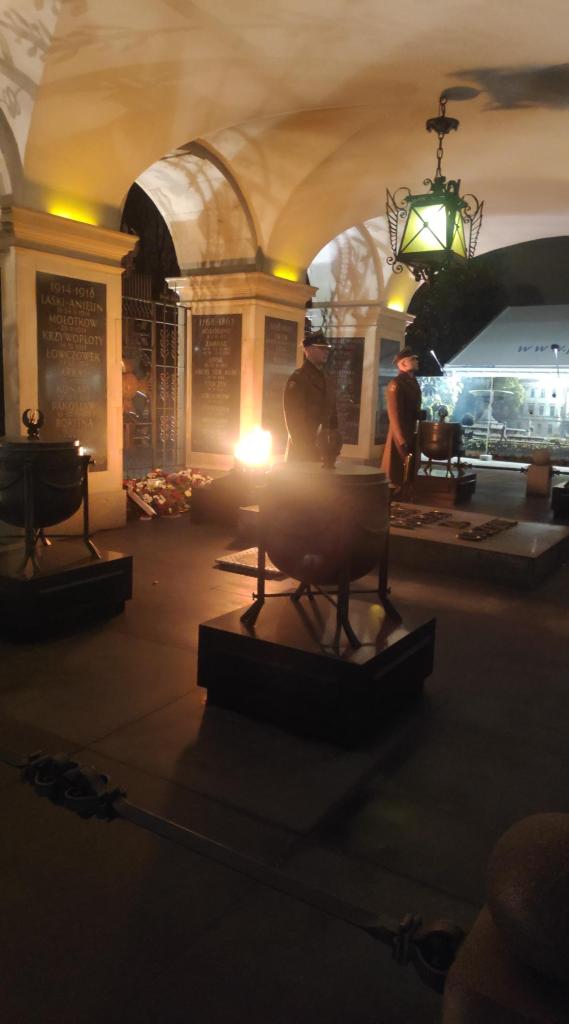
The tour guide did point out that the Polish population is decreasing due to so many Poles going abroad. I wonder why they would be doing that….Anyway, a nice perk of the tour was that they bought us all a free drink from Caffe Nero. Considering how cold it was, this was much appreciated. At seven, our tour finished with a witnessing of the Warsaw version of the Changing of the Guard – the two guards standing over the tomb of the Unknown Soldier were relieved by two others. And unlike in London, there aren’t masses of crowds, so you can actually see something.
From here, I left my new colleagues and brought some food for our long trip to the programme venue. And I returned to the Milk Bar to eat some pierogi for dinner. I was in Poland after all. How do I not get pierogi?

That brings my second day in Poland to a close. It was a day of new friends, pierogi and brave Polish heroes.
 James Linton Writing
2 thoughts on “My Polish trip – 30/11/24 – a Day of Pierogi, city tours and brave Polish heroes”