
Read my Bradford travel logue here.
The 29th city on my list is the North Yorkshire city of Ripon which you will find 213 miles north of London. Ripon has a couple of etymologies. Some people think its name derives from the ancient Hyrpa tribe. Others say it means “by the riverside,” as Ripon was built on three rivers: Ure, Laver and Skell.
Either way, it is difficult to reach Ripon. Similarly to Wells, it does not have a train station (thank you Beeching Axe.) This means you either have to go to Harrogate, Thirsk or York and get the bus from there. Things were only complicated when engineering works were announced between York and Harrogate. This meant instead of getting the bus from Harrogate I would instead be getting it from Leeds. At least that’s what I thought. More on this later.
My journey began at 15.03 where I took an LNER train from London King’s Cross. If you think this is rather late, you would be right. For I was not going straight to Ripon. I would be staying over night with my two newly-married friends: Zayd and Joanna who live in rural Yorkshire. Due to the aforementioned train issues, my plan was to go to Leeds then get the bus to Harrogate where Zayd would pick me up.
Having said that, my train made no mention of any disruption between Leeds and Harrogate and it also still seemed to be terminating in Harrogate, so I reckon I could have taken a train to Harrogate after all. Alas, my ticket was for Leeds so that’s where I had to alight. That’s what I did at 17.28. Then it was time to get the bus.
What I didn’t realise was the bus station was on the other side of town to the city station. by the time I found it, I had missed the bus, but at least I saw some of Leeds.

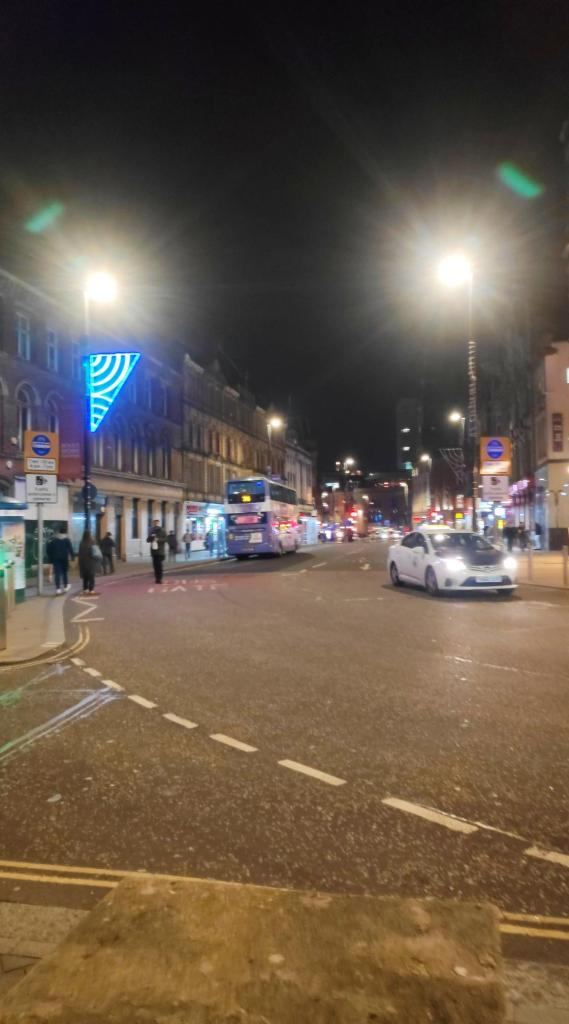
Rather than waiting half an hour for another bus, Zayd gallantly drove into Leeds and collected me from there.
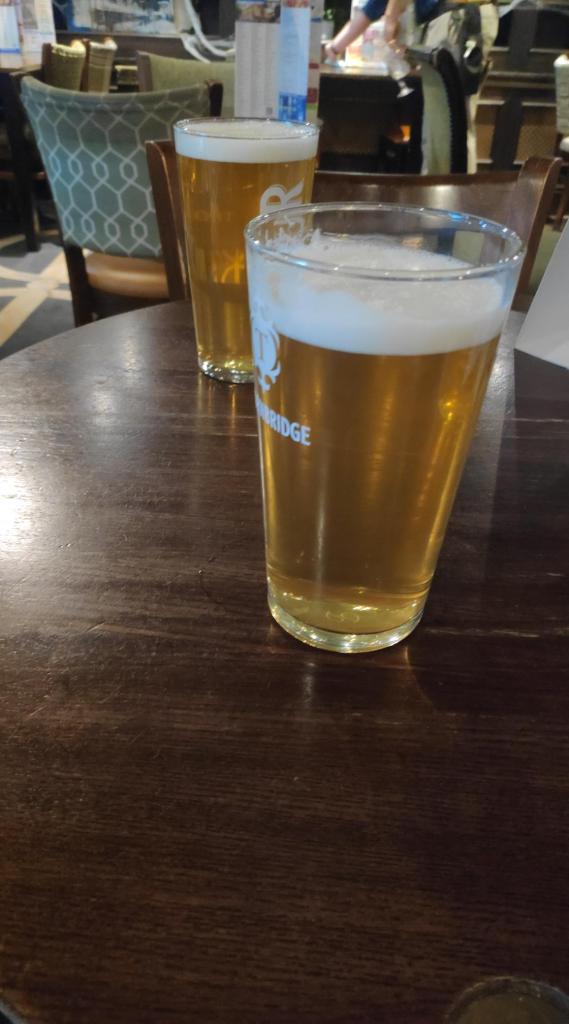
But first I had a quick pint at the local Wetherspoons.
Zayd and I have been friends since were kids – near enough twenty-five years and he’s been offering for me to stay over ever since before my plans for Bradford. I was more than happy to accept here.
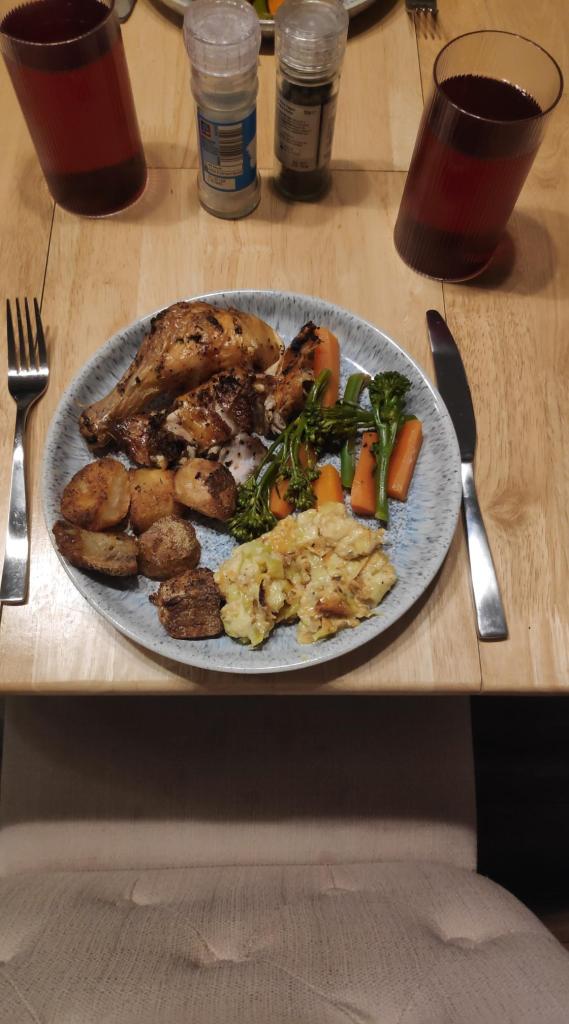
Especially since Joanna had cooked us a delicious Sunday roast.
She went to bed early, while Zayd and I watched some TV. I showed him a couple episodes of the animated anthology series Love, Death and Robots. It’s produced by David Fincher and is nothing like I’ve ever seen before. He showed me the Dexter sequel: New Blood. At 11, it was bed time.

Zayd was working in Ripon the following day, so he dropped me off there at 9am with a vague plan to get a drink later on.
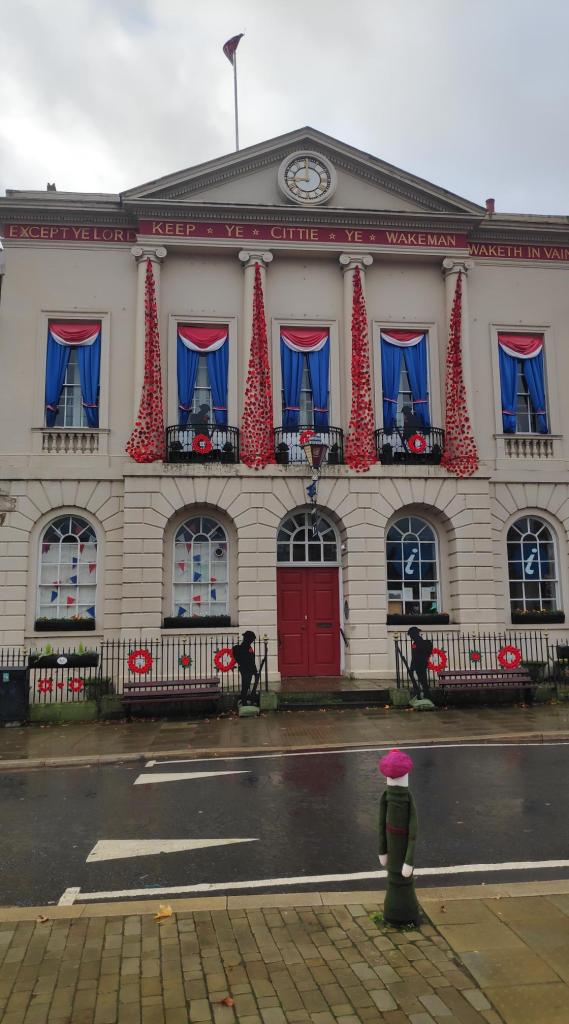
Ripon struck me as a charming, old-fashioned city complete with town square, a host of independent shops, as well as a plethora of Italian restaurants. As usual, my first stop was the cathedral where unlike Salisbury it was free to enter. And, unlike Gloucester, they don’t guilt-trip you into donating.
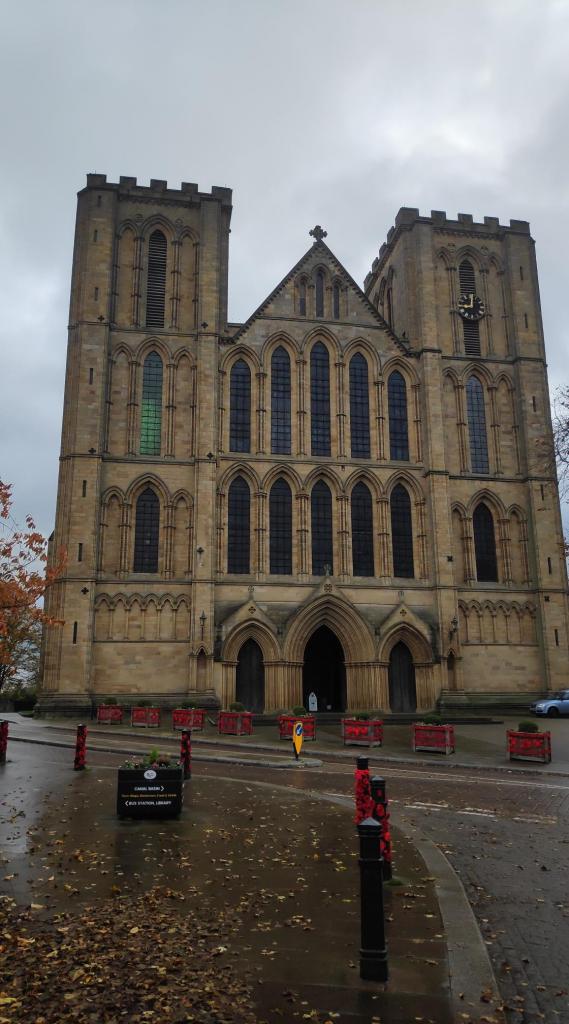
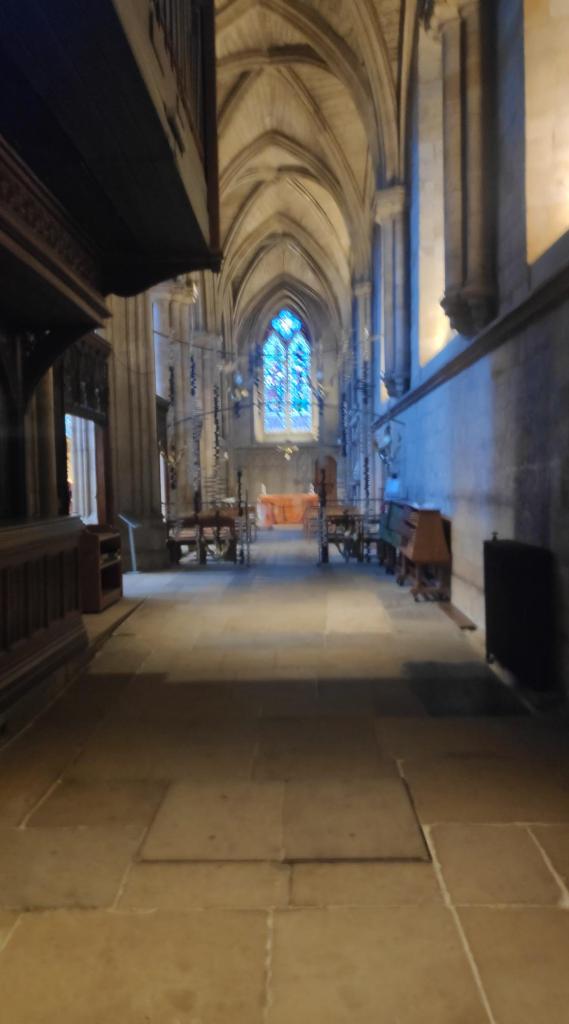
The cathedral was impressive even if my pictures didn’t show it. I had to be sly as they required you to buy a permit to take photos. And unlike other churches, there were plenty of staff everywhere who wouldn’t have hesitated to have told me off. Nonetheless it had a cool scavenger hunt which pointed out features like the altar, font, a random hand to direct the choir and a stained-glass window of the cathedral’s founder: St Wilfred. It also had a little exhibition on “Surviving Evin Prison,” which documented the story of British-Iranian national Anoueseh Ashouri who was wrongly imprisoned by the Iranian regime. Eventually, he was released along with famed Nazinin Zaghari-Ratcliffe after the UK paid a long-standing debt to Iran. Amnesty International created the exhibition to highlight the appalling conditions Anouseh had to face.

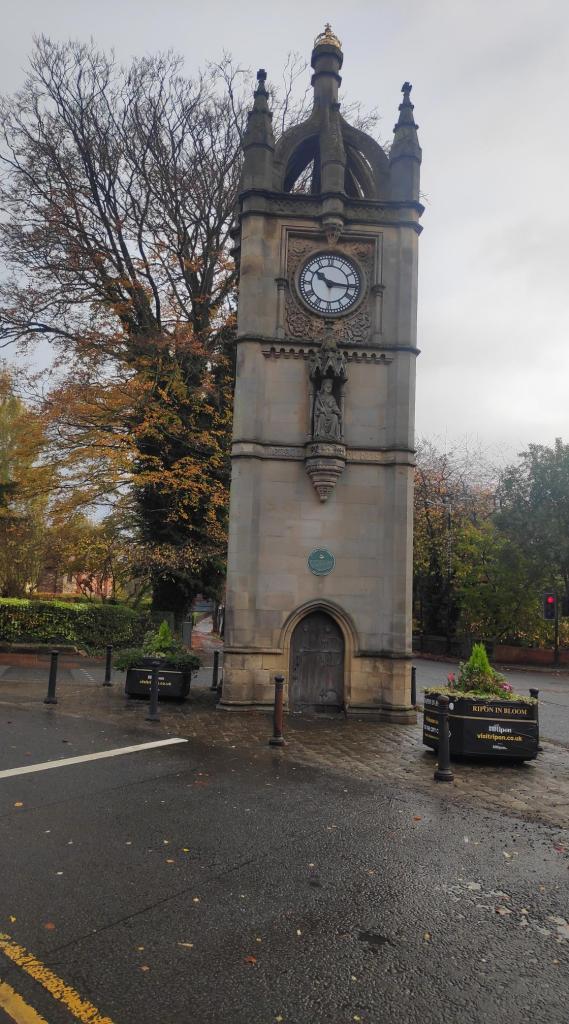
At half nine, it was time to explore the rest of the city centre. I found the Victoria Clock tower and these strange sculptures. I also found the local Catholic church, which was closed. However, the Trinity church was open.

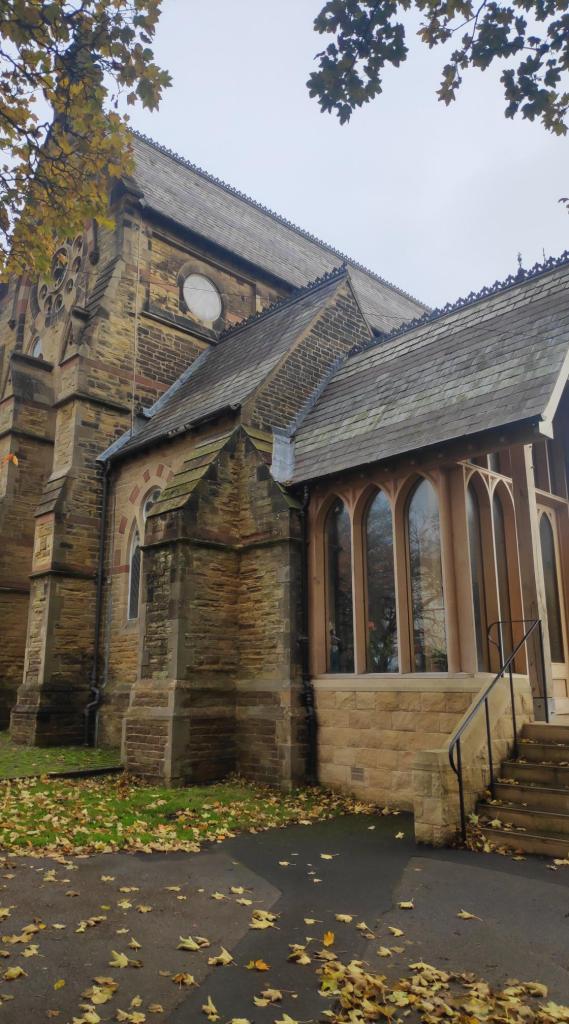
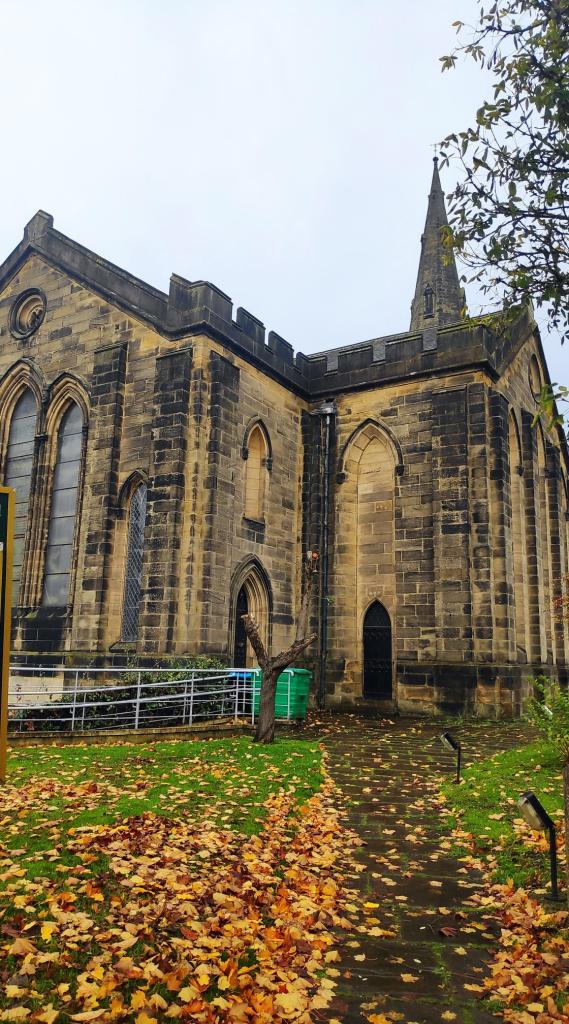
The vicar John was more than happy to show me around. He explained that the Church dates back two hundred years, but it received a refurbishment in 2000, which brought it into the 21st century. He also showed me the church’s founder Edward Kilvington.


John was a friendly chap. He recommended that I visit the city’s trio of museums next. But first, you know I had to go shopping in Ripon’s various charity shops. While some of them had the stereotypical old people’s smell, I picked up two books: Atonement and the Girl with the Dragon Tattoo, as well as four DVDs: Everything is Illuminated, Stranger than Fiction, Bullitt and Thank you for Smoking. All for 5.50. If you disregard that I had to pay for travelling to Ripon, this was a real bargain. I love getting things at a discount.
It may surprise you to know that I was willing to pay £20 on the annual pass for the city’s three museums. Generally, I’m too cheap to pay for any of the city’s attractions just like in St Alban’s or Southampton. However, Ripon wasn’t the biggest city and I had quickly run out of things to do. It was also raining, so it was onto the museums.
The first focussed on police and crime. I think the original police station had been turned into a museum. There was a dress-up section which I obviously participated in. You could see the original cells complete with creepy mannequins and heavy steel doors. It also had some information on the original police force created by Sir Robert Peel in the 19th century. Common nicknames for police, including Bobbies and Peelers, take their name from Sir Robert Peel himself. The museum was interesting, but it would have been better without the annoying pack of pre-teen boys running around and causing trouble.
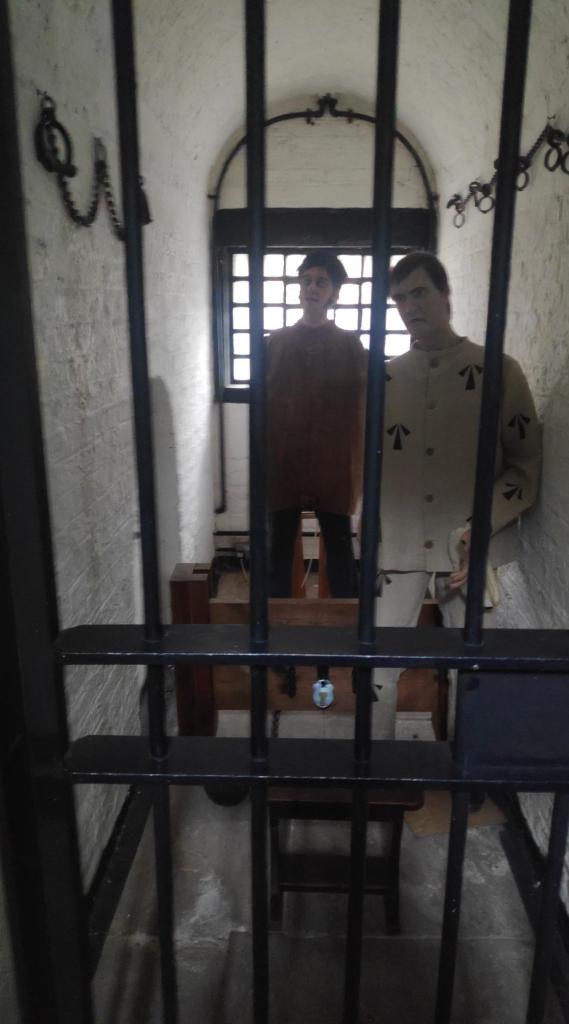

The next museum was the Workhouse Museum, which, surprise surprise, used to be the city’s workhouse. I was welcomed by a volunteer called Alex – an old man with one of the thickest Yorkshire accents known to man. I wish I could relay all the interesting things he said, but I barely understood him. At least I had the chance to look around the museum myself.
Workhouses wanted to be where the poor, wretched tramps would go. It was seen as a last resort and generally very shameful to end up in a workhouse. Once there you had to earn your keep, but you were never paid. That means you were likely to be there for life. The food, accommodation and medical care were basic. The work was tough, manual labour. The bedrooms looked little better than prison cells I saw in the police museum. And God help you if you had any mental illnesses. You were just strapped to a chair and left to it.


There was also a very sad section on prostitution – generally very poor families would either sell their daughters to the local brothel or the daughters would even be kidnapped to then live out on awful existence. If they were virgins, they would fetch even more money.
On a lighter note, the museum had a nice vegetable garden with a funny stone.

I exited the museum via the back way and my tummy was making the rumblies, it was time to get lunch before I visited the final museum.
Lunch? A hefty bacon and sausage sandwich from the Big Bites sandwich bar. For £6.30 too. Half the price of my lunch in Hereford. I returned to the cathedral to escape the rain where I was granted by a far warmer welcome than before. It was half twelve now and they were far more open for visitors than before. In fact, there was not shortage of visitors.
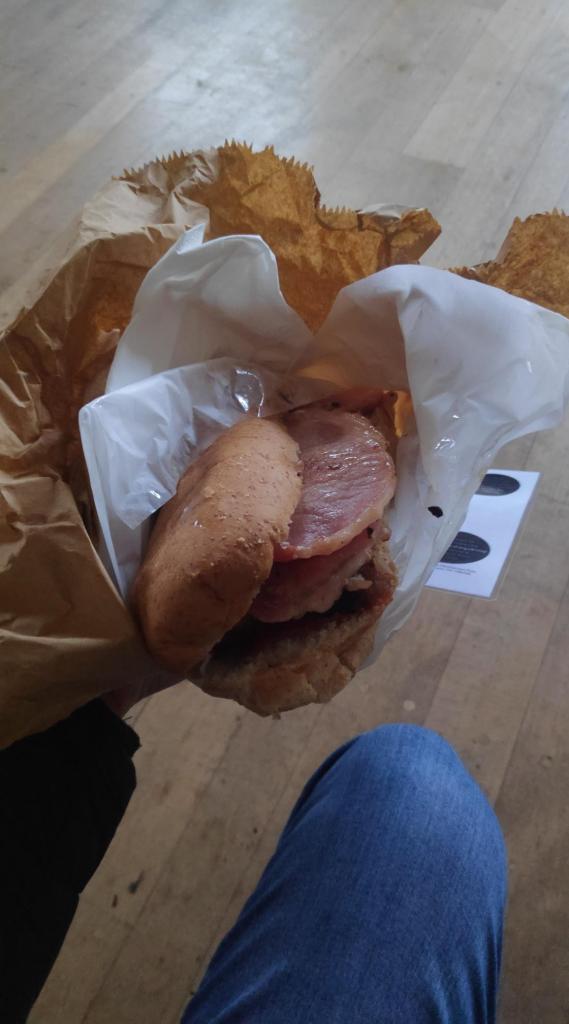
I was greeted by the cathedral’s reverend who recommended I visit the crypt which I had missed earlier. But first I ate my lunch in the library. Like I say, it was hefty and pretty dry, but it filled a big hole in my stomach. The crypt itself was interesting. It dated back to 632AD and used to be where St Wilfred stored all his valuables.
By now it was 1, so it was time to visit the final museum: the courthouse museum, which unsurprisingly used to be the city’s Courthouse complete with the jury room itself.

It was the smallest museum of the three, but still interesting as it explained all about the different punishments which were allotted for a series of crimes. Some people would be put in stocks, others flogged, others sent to the Australian penal colony. You could even order crimes from most to least severe. How did I do?

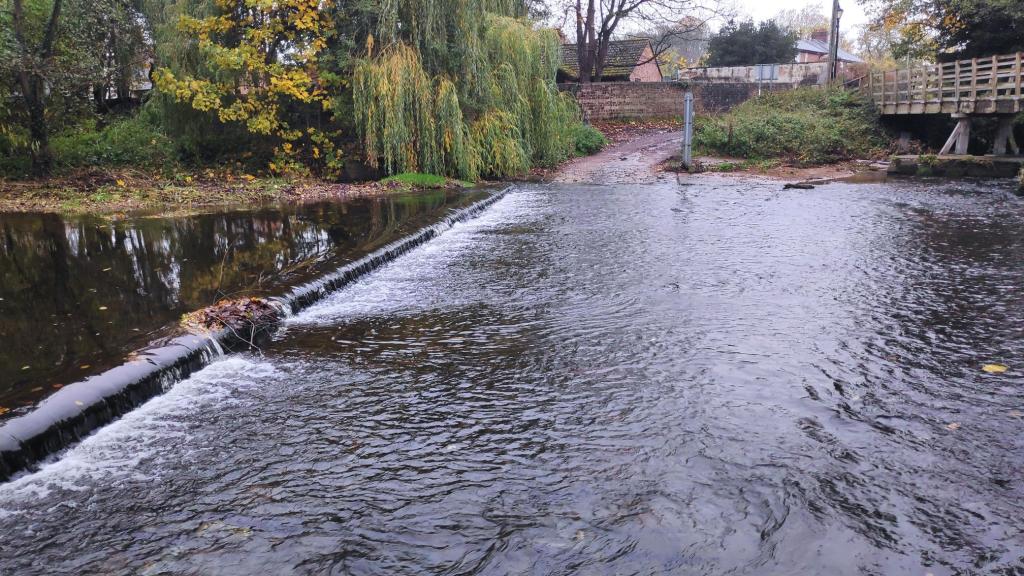
At half 1, it was time for my nature walk. I headed down to the nearby River Skell. It was pleasant down there – definitely would have been lovely in summer like when I had gone to Canterbury or Chester. I saw ducks galore and flooded ford.

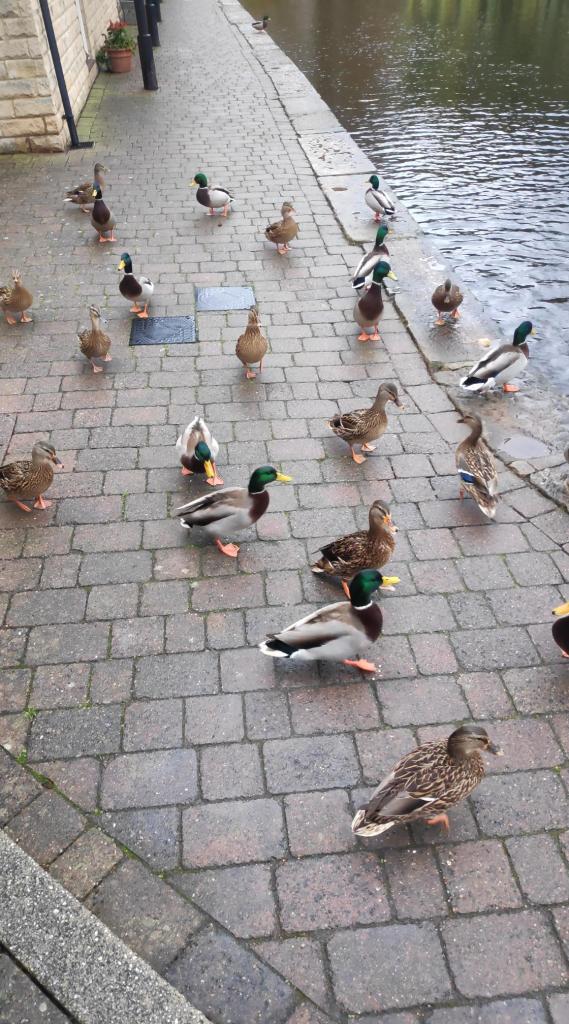
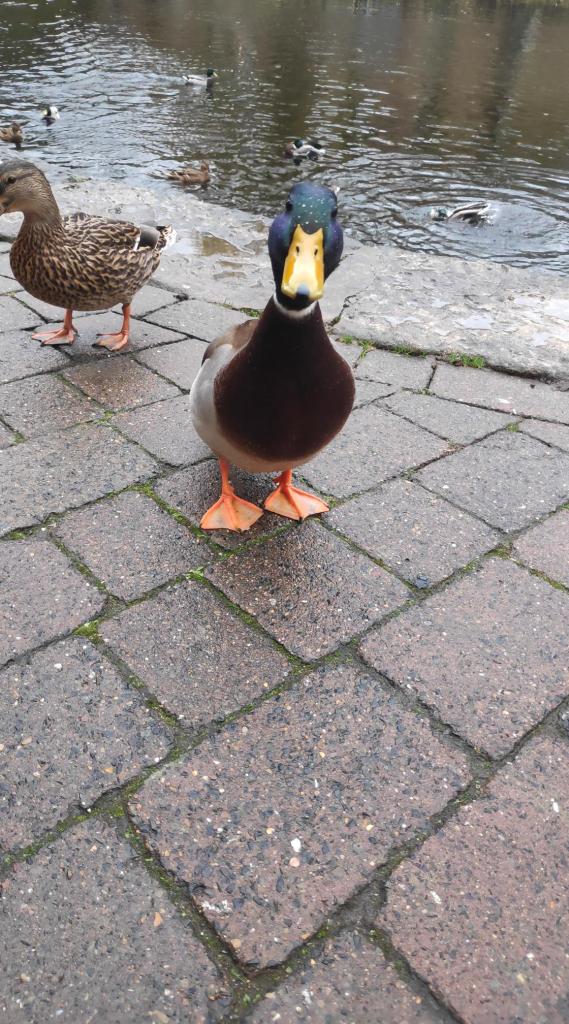
Next it was onto the Ripon Canal. It was so cool. You could buy duck food and feed the copious amounts of ducks. This was exactly what I did. They couldn’t get enough. Neither could I. Highlight of the trip for sure.
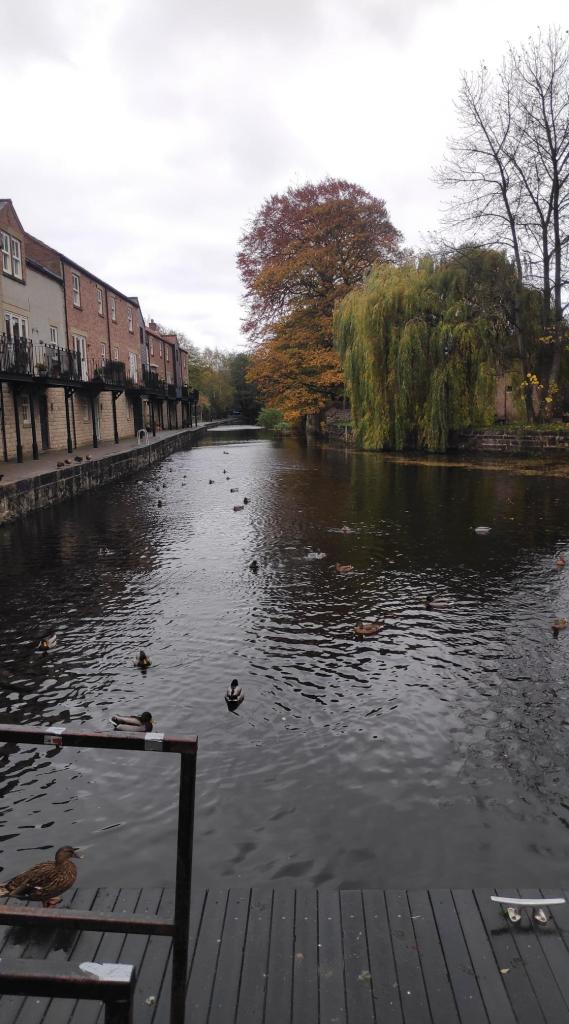
From here, I walked along the canal. Initially, it ran parallel to a noisy and busy road, which wasn’t very nice. Thankfully, the canal soon diverted away from the road. And it turned into a pleasant if muddy walk. I walked to the Nicholson Bridge before heading back.


It would have been nice to have walked for longer, but I had a long bus journey back to Leeds. And I definitely did not want to miss my bus.
I arrived back in the city centre at three and after a brief rest in the library, I caught the 15.25 36 bus back to Leeds. If there wasn’t this supposed trip disruption I could have gone home via Harrogate. But nope, it was Leeds for me. An incredibly slow two hours later, I was in Leeds. I really did not expect the bus ride to be that long. I’m just glad I didn’t get a later bus. They only ran every thirty minutes. If I missed it, I would have been in trouble.
It was 17.40 by this time. Now I would have liked to have a proper dinner in Leeds, but as my train was at 18.15, so I didn’t have time. It was sad, but I just got something quick from the Co-Op. Also I didn’t have time to see Zayd again. Very sad, but his hospitality was appreciated.
Anyway, I caught my 18.15 train and it was home to London. The train arrived half an hour late due to a track defect near Grantham, but I will definitely be applying for compensation. And that wraps up my day in Ripon complete with a brief diversion to Zayd and Joanna’s house. I enjoyed Ripon. It was charming and cute if small and difficult to reach. I’m probably not going to return there anytime soon. That was my day though: a day of newly weds, impenetrable accents and feeding ducks. Only six cities left now! Time to visit England’s most South-westerly city: Truro. I’m coming for you.
 James Linton Writing
Yorkshire rain doesn’t fall. It judges you from above and then proceeds accordingly.
LikeLike